Should you put prices on your website? An honest answer for small businesses
The question every small business wrestles with

Should you put prices on your website? It is one of the most common questions small business owners agonise over, and the instinct is usually to hide them. It feels safer: what if competitors see them, what if I scare people off, what if I want to charge different customers differently? So the prices come off, replaced by "contact us for a quote", and the owner feels protected. In reality, that instinct often costs you more customers than it saves. Let us look honestly at both sides, then at how to show pricing sensibly even when your jobs vary.
Why hiding prices usually backfires
Put yourself in the customer's shoes. They are comparing a few businesses, and they want a sense of cost before they invest time in a conversation. On your site they find no price, just an invitation to enquire. For many people, that is a reason to click away, not to call. They assume "no price means expensive", or they simply cannot be bothered to make contact just to get a number they could have seen elsewhere. The customer who would have happily paid your rate leaves before you ever hear from them.
Hidden prices also cost you time. When you finally do get enquiries, many are from people who had no idea of your rates and are shocked when they hear them, so you spend hours quoting jobs that were never a fit. Showing at least some pricing does the filtering for you, so the people who contact you already know roughly what to expect and are closer to booking. Transparency tends to bring you better enquiries and fewer wasted ones.
The trust you gain by being open
Beyond the practical points, showing prices builds trust, and trust wins work. Being upfront about money signals a business with כלום to hide, one that will be straight with the customer about everything. Vagueness about price makes people wonder what else is vague, and quietly suggests the answer might be uncomfortable. In trades where customers have been stung by surprise bills and pushy quotes, a business that plainly states its prices stands out as refreshingly honest, and honesty is exactly what a cautious customer is hunting for.
As for competitors seeing your prices, they can usually find them anyway by simply asking, and competing purely on being the cheapest is a race to the bottom you do not want to win. It is far better to show your price and justify your value than to hide it and let the customer assume the worst.
But my jobs are all different
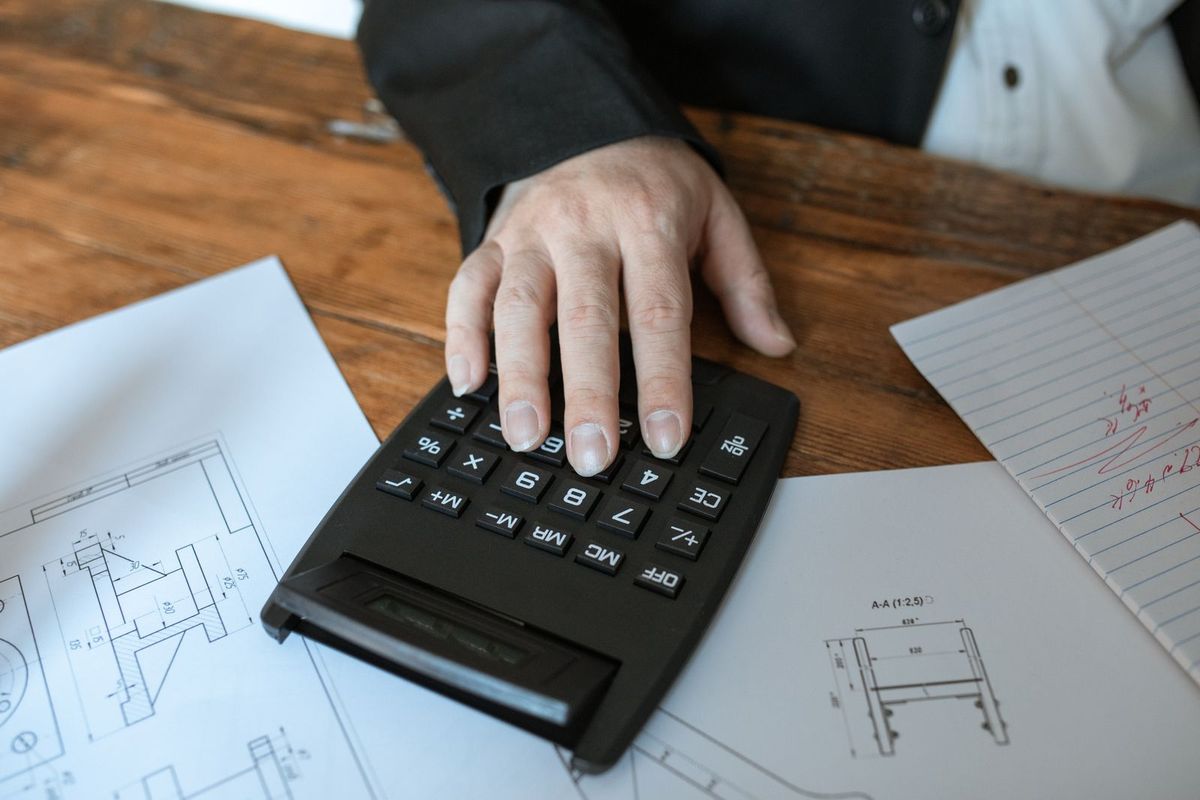
This is the real objection for many trades, and it is fair: a builder or a caterer genuinely cannot put a fixed price on work that varies enormously. But "I cannot give an exact price" does not mean "I must show no price at all". There is almost always a way to give the customer a helpful anchor without committing to a number blind. The goal is not a rigid price list; it is removing the fear of the complete unknown.
So even when every job differs, you can still be useful about cost. The point is to let a visitor picture roughly where they stand, so they can decide whether to take the next step, rather than leaving them with כלום to go on.
Ways to show pricing without pinning yourself down
There are several honest ways to give a sense of price when a fixed figure will not work. You can show "from" prices: "kitchens from £X", "haircuts from £Y", giving a realistic starting point. You can show price ranges or bands for typical jobs, so people see the low and high ends. You can offer clear packages at set prices for your common services, even if bespoke work is quoted separately. You can publish your hourly or day rate. Or you can give guide prices with honest examples: "a typical small bathroom is usually around £X to £Y, depending on the finish".
Any of these is far better than silence. Pair them with a short, honest note that final prices depend on the specifics and you will give an exact quote, and you get the best of both: the reassurance of transparency, and the flexibility your work needs. מותאם אישיתers understand that details affect cost; what they cannot forgive is being told כלום at all.
When keeping prices off does make sense
To be fair to the other side, there are genuine cases where showing prices is not the right call. Truly bespoke, high-end work, where the whole value is a tailored solution and clients expect a personal quote, can suit a discreet approach. Some business-to-business work is genuinely negotiated per client and per contract. And if your prices are deliberately premium, showing a raw number without the context that justifies it can put people off before they understand what they are getting. But these are specific situations, not a blanket excuse. Even here, a sense of scale, a minimum spend, a "projects typically start from", usually helps more than total silence, by making sure the enquiries you get are from people in the right ballpark.
Use price to sell value, not just state cost
Showing a price is also a chance to justify it. A number sitting alone invites a straight comparison on cheapness; a price presented alongside what it includes reframes the decision around value. So next to your figure, briefly say what the customer gets for it: the quality, the guarantee, what is included, the care you take. "Full bathroom fit from £X, including removal, tiling and a two-year guarantee" reads very differently from a bare "£X". This way, transparency does not just answer the cost question, it makes the case for why you are worth it, which is exactly how a good business competes without dropping to the bottom on price.
Make the pricing easy to find and read
However you present prices, make them easy to find, since a price buried three clicks deep helps no one. A clear pricing section or page, linked from your menu, does the job, and for service businesses a price sense on each service page is even better. Lay prices out simply and readably, a clean list or a few clear packages, rather than a wall of confusing figures. And keep them current; an out-of-date price that you then have to correct upwards on the phone damages the very trust that showing prices was meant to build. Accurate, tidy, easy-to-find pricing is part of the reassurance.
A pricing page that builds trust, made simple
Presenting your prices clearly is easy when the layout is ready for it. With Semalt you get a complete site in minutes with room for a tidy pricing section or packages, and price details on your service pages, all editable in a few taps so you can keep them current. You choose how to show your prices, from figures, ranges or packages, and publish.
It is free to try, and you can go live straight away or connect your own domain later. Give customers an honest sense of cost, filter your enquiries, and win the trust that hidden prices quietly throw away.
